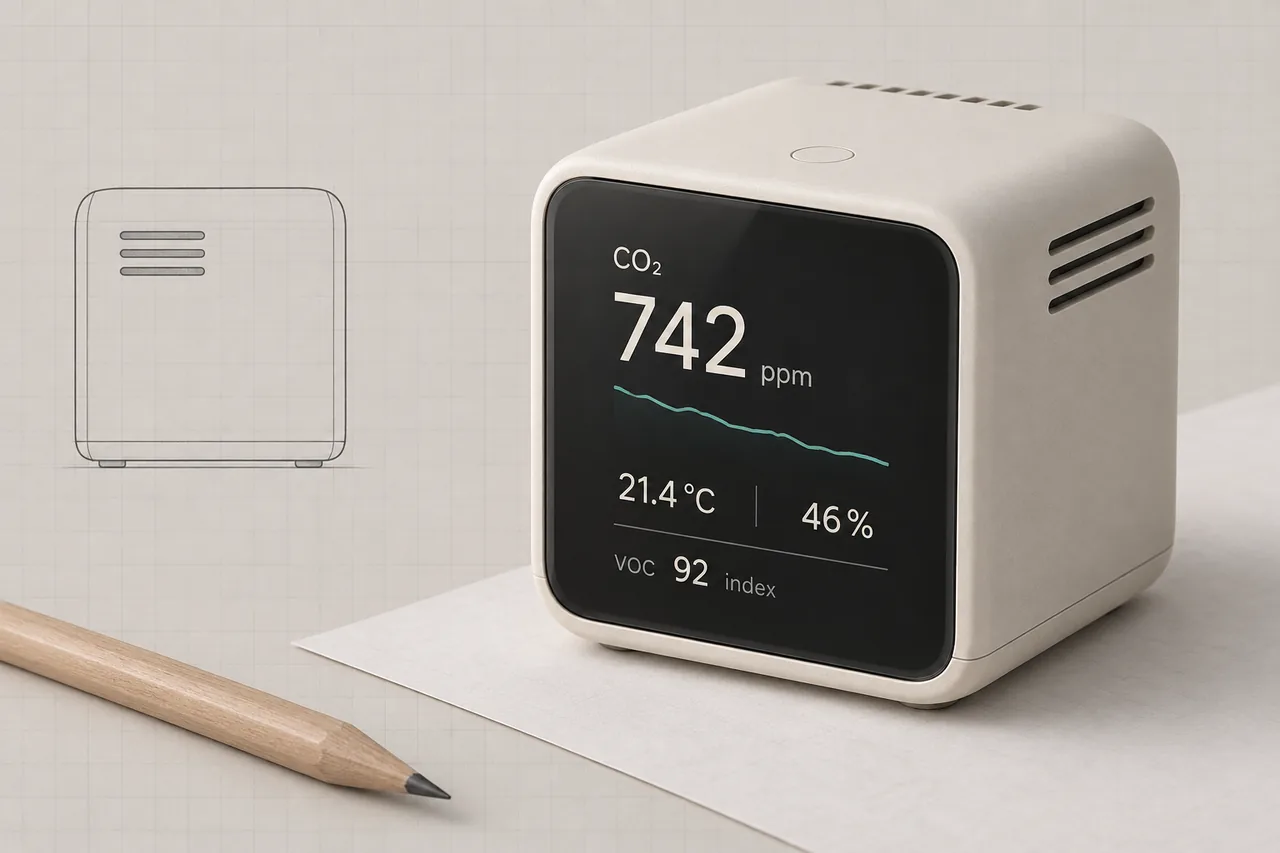
A useful paperweight.
A desk object that could show CO₂, temperature and humidity at a glance. The display made the idea easy to explain.
Xube product · development case study
From a sensor paperweight to a small, screenless device for the home. A continuing project in which each conversation helps shape the hardware, app and experience.
A wearable can tell you about your body. It cannot provide the whole picture of the air in the rooms where you live. Unwearable is being developed by Xube to measure that environment: CO₂, temperature, humidity and other air conditions.
This is our own product development project, documented at Prototyped to show how we work with a changing brief. The design, CAD, interaction prototype and website are here. A validated physical product is the next stage.
Unwearable began as a desk paperweight with a display. As we talked through how people would use it at home, the brief became clearer: measure the room, keep the device small, and put the detail on the phone.
A desk object that could show CO₂, temperature and humidity at a glance. The display made the idea easy to explain.
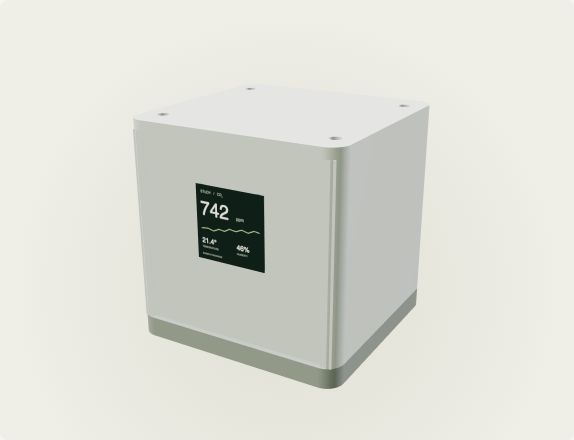
We explored a compact display and a smaller product direction. The detailed sensor packaging study was still 88 × 84 × 88 mm. It showed what needed to change.
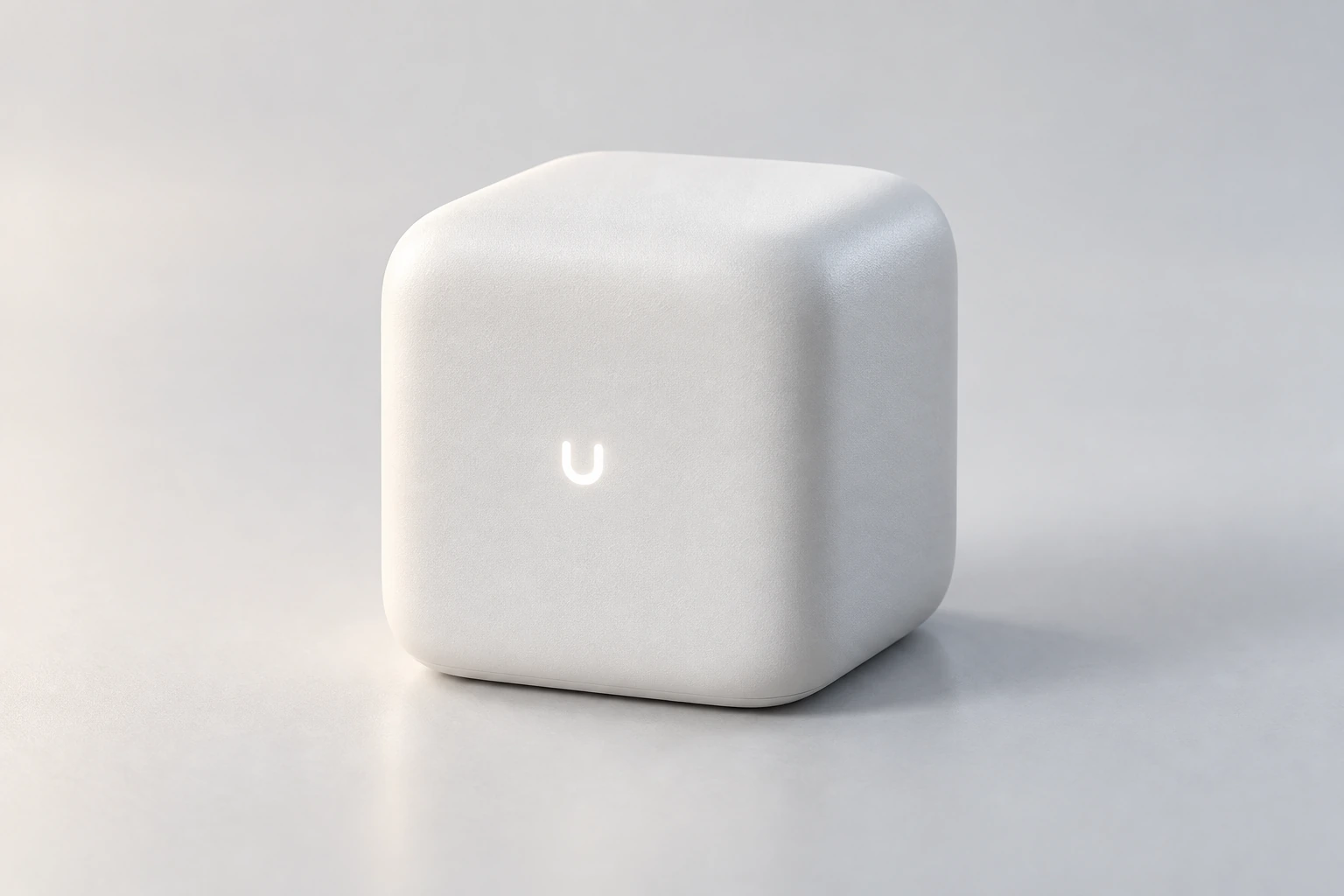
A 50 mm envelope, softened edges and one glowing “u”. Removing the display gives the device a simpler role: stay in the room and measure it.
Concept renders and CAD studies document design decisions. They are not photographs of completed devices.
The glowing “u” became the power indicator. Then came the practical question: how does room air reach the sensors without interrupting the form?
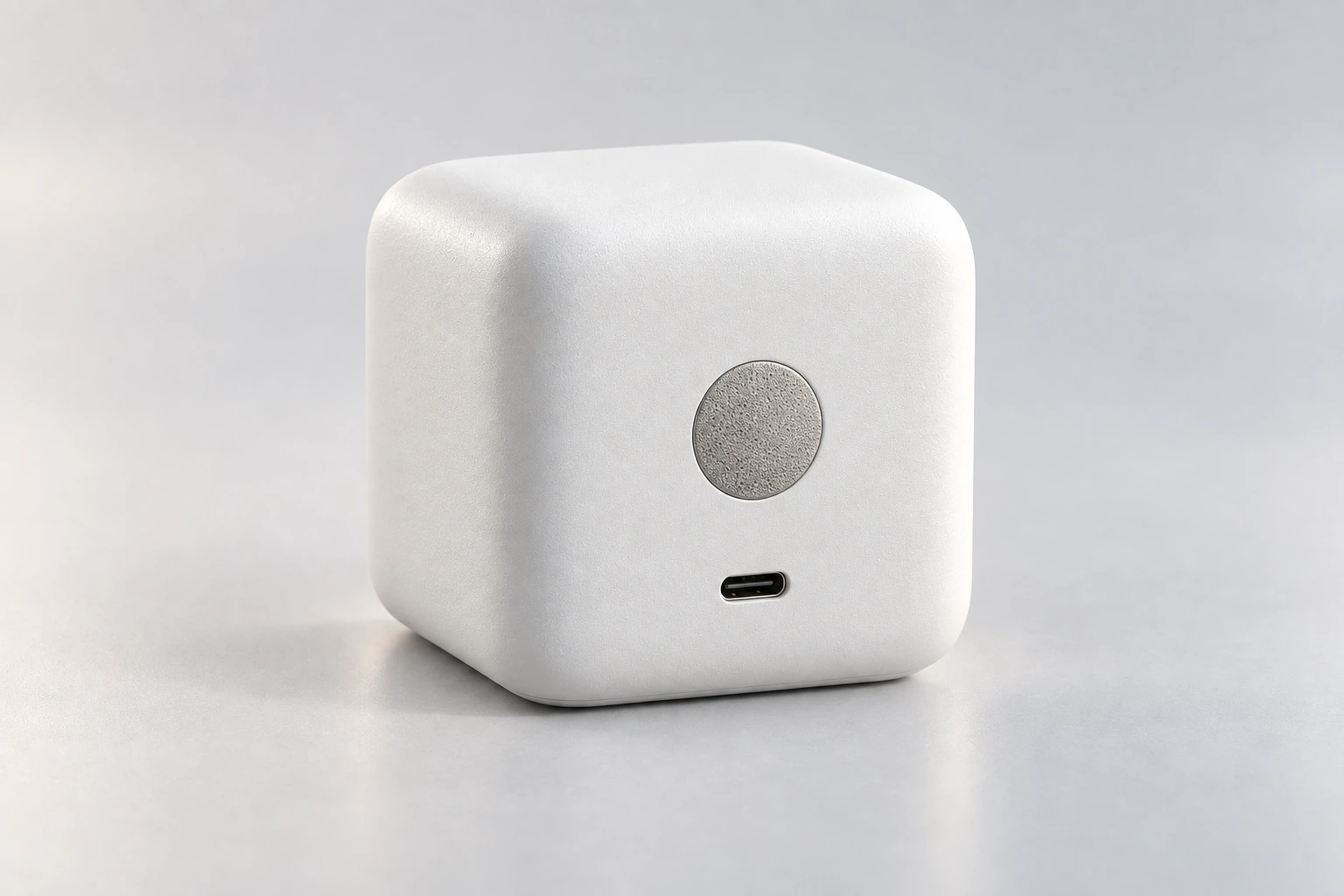
A flush sintered-steel vent gave the gas and humidity sensors an air path. It kept the front clean, with the vent above USB-C.
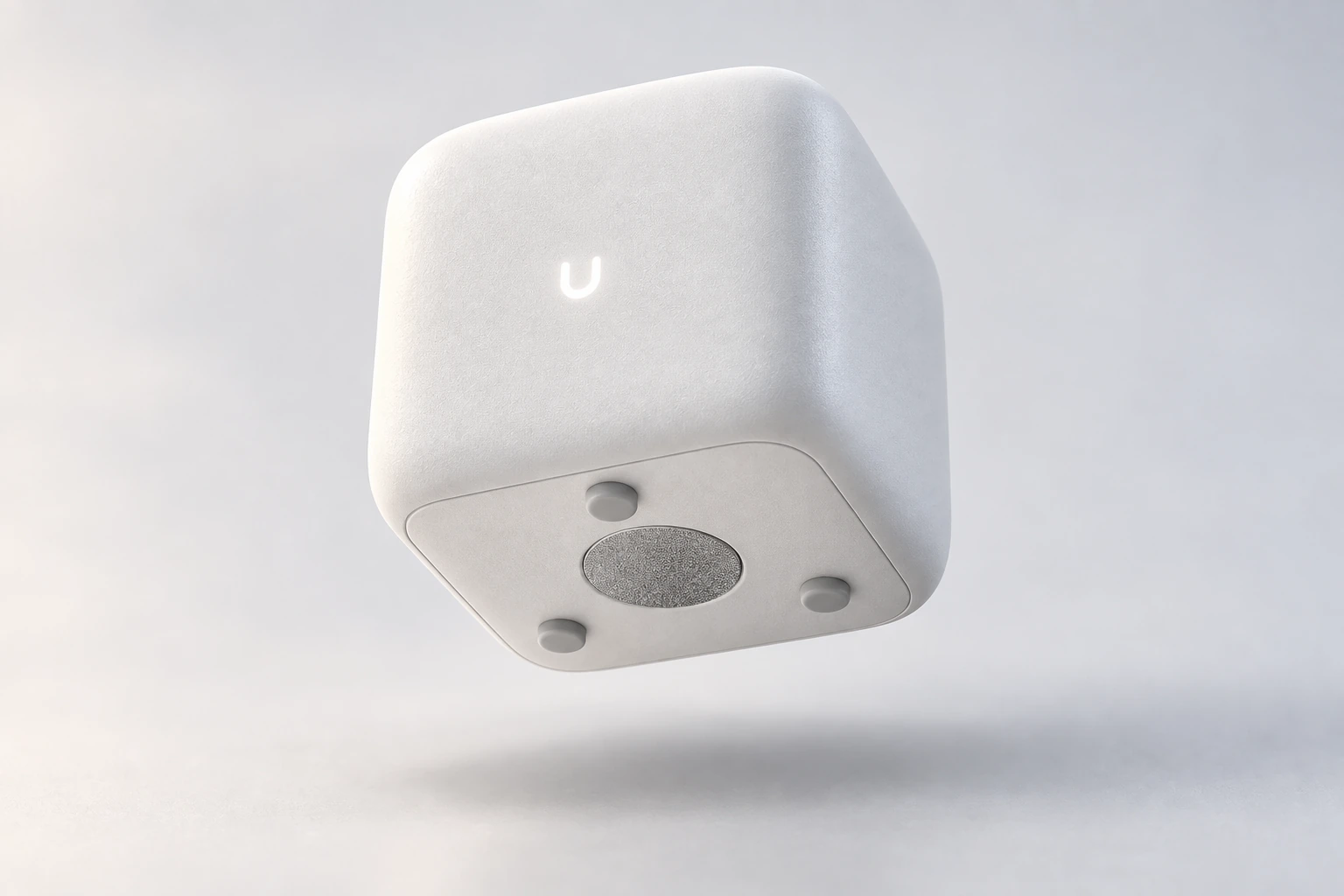
Small rubber feet suggested a cleaner solution: tuck the disc below the device. Three support points reduce rocking and leave an air gap. The screws sit underneath the rubber feet, keeping them out of sight. Body and feet together stay within 50 mm.
The next step is to measure diffusion, response time and temperature bias in that position. A sintered disc can obstruct particles, so particulate sensing needs a separate, validated sampling or optical path.
The screen did not just disappear. Its job moved to a phone interface: room selection, individual measurements and history in one place.
Try switching rooms, choosing a measurement and opening History. Tap + to walk through device discovery, Wi-Fi setup and room naming. This browser prototype lets us review the interaction before committing to device firmware or a native app.
Open the app preview ↗Interactive design prototype · example data · no device connection
Current 50 mm form study, with assembled and exploded views.
Drag to rotate · scroll to zoom · arrow keys to rotate
R2 form study, 50 × 50 × 50 mm including the feet. The disc and feet represent supplier parts. Physical fit, sensor response and electronics integration remain to be validated.
The smaller form means revisiting the sensor layout, antenna, power and assembly—not simply scaling down a model. The first large sensor module will be replaced by a compact sensing architecture, with SHT45 retained for temperature and humidity.
We are carrying the same decisions into the app: clear room names, visible units, history and honest states for old or missing readings. Bluetooth and Wi-Fi implementation, battery backup, calibration and production testing still need to be completed.
For a customer project, this is one connected scope: product design, CAD, electronics, firmware, application design and the website that explains it. Each round is reviewed together before the next commitment.