3D design & tooling
Custom gaskets,
made with printed moulds.
Sometimes the useful thing to print is the tool that makes the part.
A flexible part.
A practical way to make it.
A custom enclosure needed a silicone gasket with a specific shape. We used 3D-printed moulds to cast the flexible seal, then developed the tooling around what happened during filling and release.
That brought product geometry, material behaviour and small-run production into the same design process.
Explore the actual mould
Six cavities. A matching base and lid.
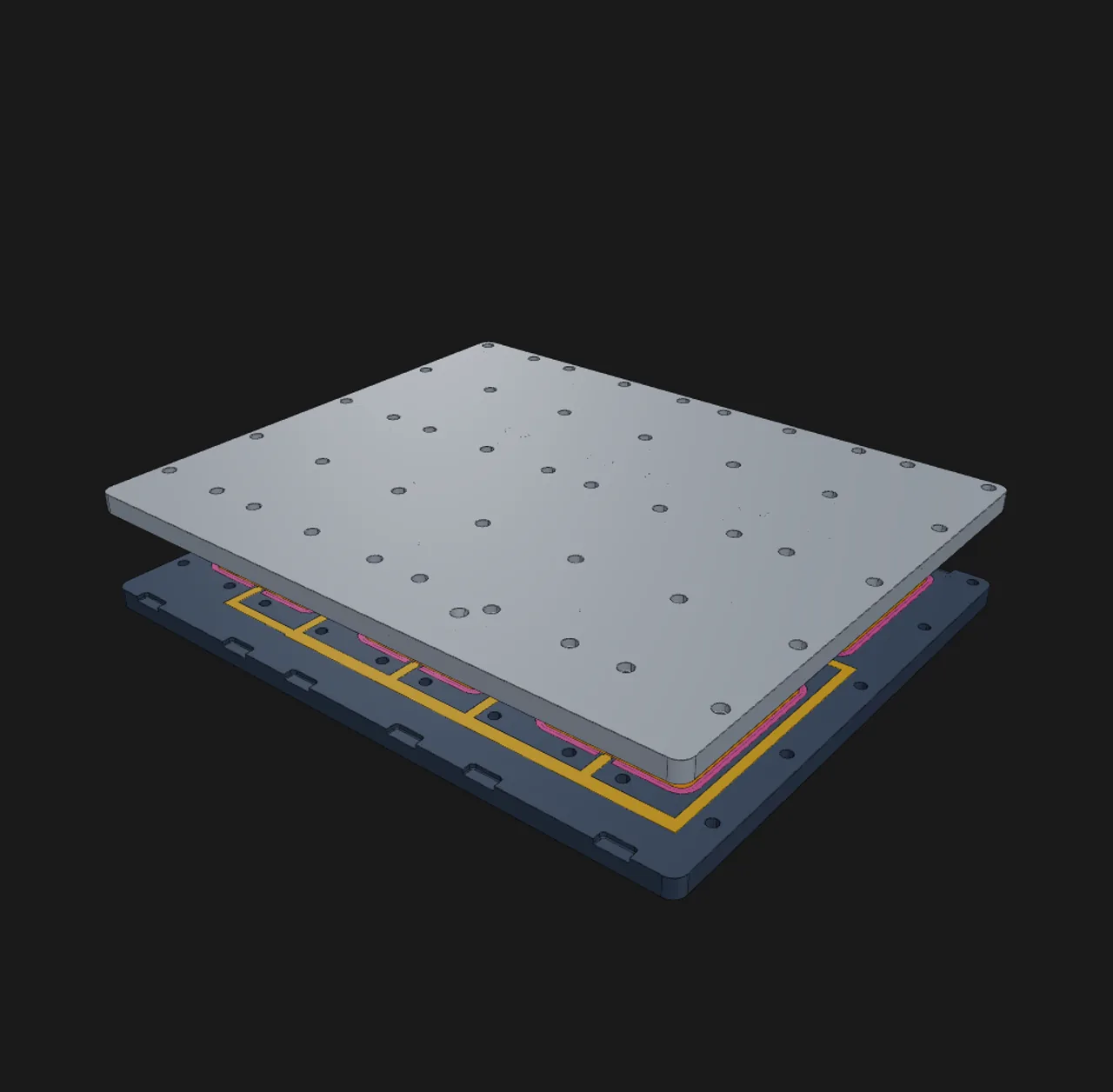
Drag to rotate · scroll to zoom · arrow keys to rotate
Actual project geometry, rendered from the downloadable STL files.
Make it easier
to fill and open.
The initial mould exposed two practical issues: thicker silicone was difficult to push through, and excess silicone left a thin web around the gasket.
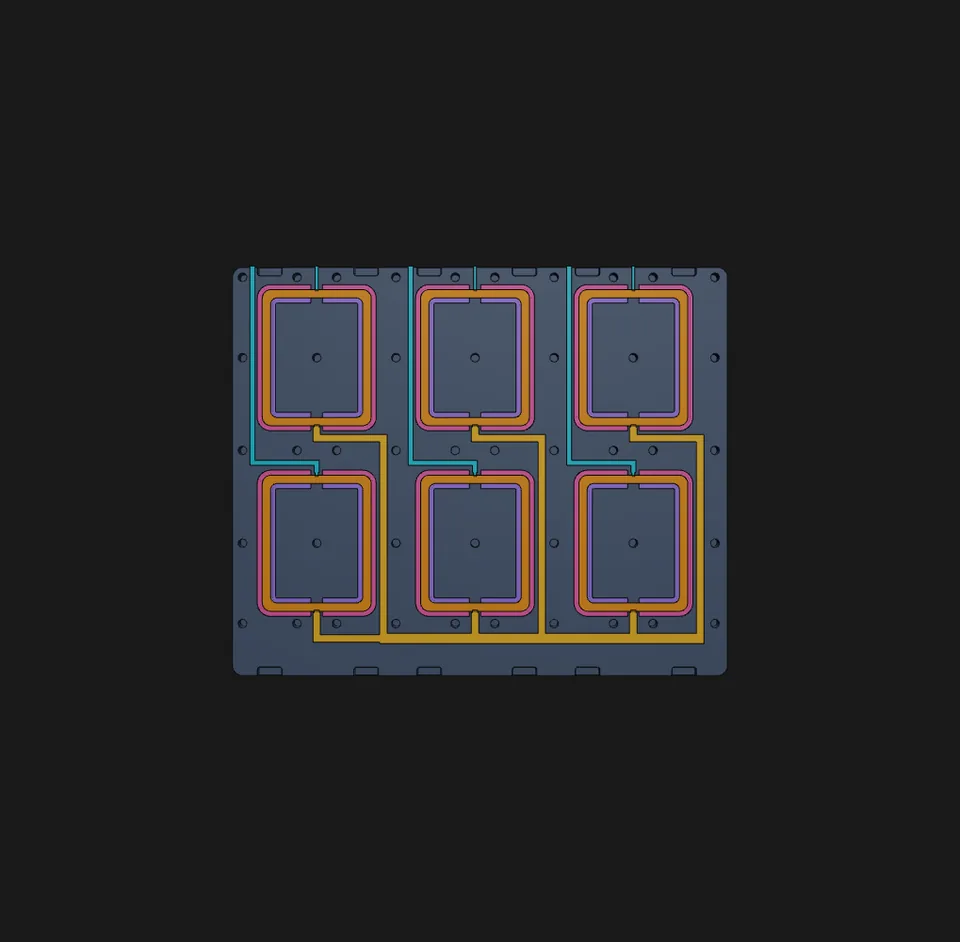
The revisions focused on the tooling. Feed paths carry silicone to each cavity; separate outlets let air and excess material escape. Gutters collect flash around the seal, and recessed opening pockets provide access when separating the halves.
The finished gasket geometry stayed unchanged. The mould could evolve around it.
From one seal
to a small run.
The six-cavity revision brings repeated casts into one tool. Each printed half measures 165 × 200 × 6 mm, with one inlet and six outlets at the upper edge.
CAD checks confirmed that all six cavities reproduce the original gasket. The exported meshes were also checked for scale and watertightness. Filling behaviour, release quality and yield still need to be checked in physical casting trials.
Take a closer look
Download the matching base and lid, or open either STL in your own CAD viewer. Units are millimetres. These are prototype tooling files; they contain geometry, not printer settings.